Skip links
Migration • ServiceNow → Jira Service Management

ServiceNow to Jira Service Management migration — transparent cost, staged delivery, DevOps-connected ITSM.

Move off ServiceNow through a structured, reversible migration route onto Jira Service Management, a platform that shares its backbone with your engineering teams. Plan around published per-agent pricing, remodel the CMDB into JSM Assets, align data residency to the region you need, and get an honest scope: core service desk live in weeks, full ITSM parity in months.


Atlassian Gold Solution PartnerMigration planning, implementation and rollout support.
Multi-region deliveryPresence across India and the UAE for global rollouts.
Staged migration with rollbackTrial runs, validation and a documented cutover path.
ISO 27001 & SOC 2 Type IIBuilt on a platform certified for enterprise security.

What does a ServiceNow to JSM migration involve?

Migrating from ServiceNow to Jira Service Management means moving incidents, service requests, changes, problems and knowledge onto Atlassian's Jira Service Management platform. It also means rebuilding SLAs, approvals, automations and the CMDB in the new environment. Organisations usually make this move to reduce licensing and administration cost, remove the specialist-administrator bottleneck, and connect service management directly to software delivery. Ticket data migrates through automated tooling with field-level mapping, while SLA history, CMDB structures, approvals and integrations are rebuilt rather than copied. A staged migration validates the approach through a trial run and then cuts over in phases with a rollback path — core service desk migration typically completes in weeks, full ITSM parity usually takes months.

Why Move

Why organisations move off ServiceNow

01

Costs are hard to model

ServiceNow doesn't publish standard pricing — every deal is negotiated. Analysts estimate $70–$200+ per fulfiller/month, with implementation often 3–5x the first-year licence cost.

02

Simple changes need specialists

Workflow, request-type and SLA updates commonly require certified administrator time to make even small changes.

03

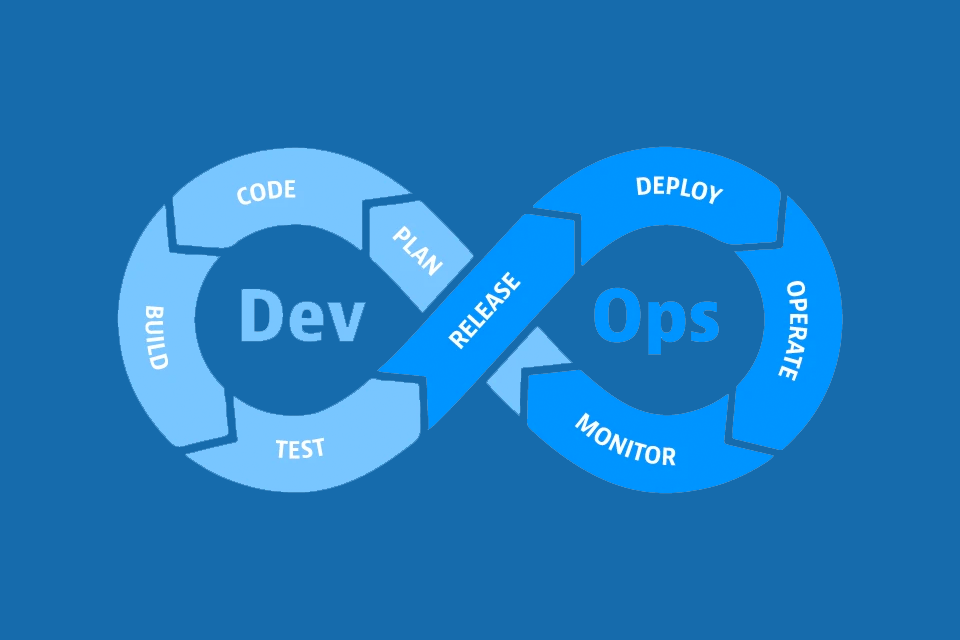
Service and delivery are split

Incidents live in one platform, fixes in another — every handover between them affects mean time to resolution.

04

Customisation debt builds up

Deep bespoke configuration can turn routine platform upgrades into projects of their own.
What You Gain

What you gain with Jira Service Management

01

Published per-agent pricing

Unlimited free requesters. $20/agent/month (Standard) and $51.42/agent/month (Premium), annual list; Enterprise quoted. Free tier up to three agents.

02

Assets/CMDB included from Standard

5,000 free objects on Standard, 50,000 on Premium, 500,000 on Enterprise, with overage from $0.02/object/month. No separate CMDB SKU.

03

Faster implementation

Verified Gartner Peer Insights reviewers report an average of 1.57 months for JSM implementation, vs. 5.19 months for ServiceNow.

04

Service desk-led configuration

Request types, workflows, SLAs, queues and automation are configured directly through the UI — no specialist gatekeeping.

05

DevOps-native operating model

JSM and Jira share a platform, so incident-to-fix linkage doesn't require integration middleware.

06

Strong independent ratings

Gartner Peer Insights rates JSM 4.5★ (~1,200 reviews) vs. ServiceNow ITSM 4.3★ (~2,024 reviews). G2 favours ServiceNow on asset/change management, JSM on AI monitoring and deployment speed.

Global Rollout

Built for multi-region, multi-entity teams

How we run migrations across regions, business units and follow-the-sun operations.

01

Data residency by region

Atlassian Cloud supports pinning in-scope product data to a specific realm on Standard, Premium and Enterprise plans, helping multi-jurisdiction groups align hosting with local requirements.

02

Phase by region or unit

Large estates rarely cut over all at once. We sequence by business unit, region or practice, with a parallel sync to keep records aligned where risk demands it.

03

One portal, many teams

The same request-type, SLA and automation model can extend beyond IT to HR, legal, facilities and finance, each retaining its own queues and permissions.

04

Follow-the-sun operations

Alerting, on-call schedules and escalation policies are configured by region, with structured handover between them.

Migration Scope

What transfers and what we rebuild

AreaStatusDetail
Incidents, problems, changes and service requestsTransfersMigrated with history and original timestamps
Public comments and internal work notesTransfersWork notes must be explicitly mapped to internal comments or they are left behind
AttachmentsTransfersSubject to source-instance size limits and API retrieval constraints
Requesters, agents and groupsTransfersAgent accounts are pre-created with matching email addresses
Custom fields, tags and labelsTransfersMapped field by field and signed off before load
Historical SLA metricsRebuiltJSM recalculates SLAs on its own engine, so the clock starts fresh
CMDB and configuration itemsRebuiltHandled as a separate workstream into JSM Assets
Approvals, automations, business rules and notificationsRebuiltRecreated to fit JSM's architecture; most teams simplify at this stage
IntegrationsRebuiltRe-established against JSM APIs and connectors
CC users and inline images in ticket bodiesDoes not transferScoped and communicated upfront
CMDB → JSM Assets

Remodelling the CMDB, not just copying it

ServiceNow CI classes and cmdb_ci tables are remodelled as JSM Assets object schemas and object types. Attributes become object attributes, and relationships become Assets references queried with AQL. CI relationships live in a separate table, cmdb_rel_ci, and must be exported and re-linked independently — internal identifiers won't match across platforms, so re-linking is usually based on CI name, and export runs happen per CI class to avoid silently losing class-specific attributes. After cutover, Assets can be maintained through Atlassian Assets Discovery or third-party tools such as Lansweeper, Device42 or Virima. ServiceNow CMDB with Discovery and Service Mapping remains stronger for automated network discovery, dependency mapping, blast-radius analysis and formal CSDM governance — JSM Assets is a flexible, service-centric configuration database well suited to asset tracking and CI-linked incident and change work, at a fraction of the cost. Capable, not identical.

Migration Method

Our migration method

A staged, reversible process designed to protect live service throughout.

01

Assess and clean

Inventory record types, catalogues, workflows, SLA definitions, integrations and CMDB. Stale data is archived, not migrated.

02

Design and map

Rebuild the operating model in JSM, design the Assets schema, and document field-level mapping for sign-off before anything moves.

03

Run a trial migration

Migrate a representative sample into a sandbox, validate results, refine the mapping and rerun until correct.

04

Full migration and delta

Perform the main load with notifications and automations suspended, then run a delta migration to capture changes made during the window.

05

Validate and reconcile

Compare record counts and manually spot-check across date ranges, priorities and statuses.

06

Cut over and optimise

Phased cutover against a documented rollback plan, ServiceNow kept read-only for around two weeks, then SLAs, automations, reporting and enablement are tuned.

Risk controls

Sandbox trial • mapping sign-off • delta capture • reconciliation • documented rollback • read-only fallback.

Delivery Model

How Gudakesa will deliver the migration

A controlled, phased model that reduces disruption and gives stakeholders visibility at every stage.

01

Discovery and readiness

Review the current ServiceNow instance, modules, workflows, fields, SLAs, user groups, integrations, CMDB and dependencies.

02

Target-state design

Define the future JSM environment across request types, workflows, queues, SLAs, approvals, automation, permissions, assets and reporting.

03

Migration blueprint

Field-mapping document, data-clean-up rules, scope, exclusions, risk register, integration plan, cutover approach and rollback plan.

04

Sandbox and trial migration

Configure the first JSM environment, run a representative sample, validate record counts and quality, refine mapping.

05

Production migration

Build the signed-off production environment, migrate approved records, rebuild automations and integrations, run the delta migration.

06

Validation and acceptance

Business validation with service owners, administrators and agents — ticket history, workflow, SLA, portal and reporting checks.

07

Training and enablement

Administrator and agent training, documentation and change communication.

08

Go-live and hypercare

Cutover support, issue monitoring, configuration gap resolution, dashboard and automation tuning.

09

Continuous optimisation

Review usage, SLA performance, queue health, automation effectiveness and adoption after real-world use begins.

Honest Timelines

What actually takes weeks — and what takes months

Core service desk: weeks. Verified reviewer data places average JSM implementation at 1.57 months.

Full ITSM parity: months. Standard implementations typically run 8–12 weeks for core modules; complex, multi-department deployments can take 6–12 months.

The load is the fast part. Planning, mapping, validation and process rebuild drive most of the timeline, not the data transfer itself — we don't claim a full ServiceNow replacement in weeks because the evidence doesn't support it.

Where Migrations Go Wrong

Why these migrations overrun

  • Treating migration as a technical lift-and-shift instead of an operational change.
  • Over-customising JSM to mirror ServiceNow, which erases the simplicity that justified the move.
  • Underestimating relational complexity — attachment chains, reference-field resolution, API pagination, orphaned user references and non-transferable SLA logic.
  • Skipping governance, adoption planning and enablement.

Each of these risks is addressed explicitly in our assessment output.

An Honest Fit Check

When you should stay on ServiceNow

ServiceNow may remain the better fit if you have:

Heavy automated CMDB Discovery & Service Mapping at enterprise scale Large ITOM, SecOps or HR estates on one data model Strict regulated ITIL governance with formal CAB and audit Very large, deeply customised multi-module deployments A funded ServiceNow transformation already in flight

If the assessment points in this direction, we will say so clearly.

FAQ

Frequently Asked Questions

Can Jira Service Management replace ServiceNow?

For most organisations, yes. JSM covers incident, request, change, problem, knowledge and configuration management. Verified reviewers rate JSM slightly higher than ServiceNow on Gartner Peer Insights. ServiceNow retains a real advantage in very large, deeply customised estates with automated discovery and heavy ITOM or SecOps footprints.

Does ticket history migrate?

Yes. Incidents, problems, changes and service requests migrate with comments, internal work notes, attachments, custom fields and original timestamps, using automated tooling against an agreed field-level mapping.

What happens to SLA history?

It does not carry across. JSM recalculates SLAs on its own engine, so the clock starts fresh. The underlying ticket records are retained, and SLA policies are rebuilt to your targets.

What happens to the CMDB?

It is remodelled into JSM Assets as a separate workstream. CI classes become object schemas, and relationships stored in ServiceNow's cmdb_rel_ci table are exported and re-linked before being maintained through discovery tooling.

How long does it take?

Core service desk migration can complete in weeks; full ITSM parity usually takes months. Verified reviewers report an average of 1.57 months for JSM, while complex multi-department programmes can run 6–12 months.

Will it cost less?

Almost always. JSM publishes per-agent pricing from $20/agent/month annually, with unlimited free requesters and Assets included from Standard. ServiceNow doesn't publish standard pricing; third-party analysts estimate $70–$200+ per fulfiller/month, with implementation often 3–5x the first-year licence cost. The assessment compares against your actual renewal.

Can we migrate region by region?

Yes. Large estates are usually phased by region, business unit or practice. A parallel sync between ServiceNow and JSM can be used where risk requires both platforms to remain aligned until each unit cuts over.

Is it reversible?

Yes. The process includes sandbox trial validation, record-count reconciliation before cutover, phased cutover against a documented rollback plan, and a read-only ServiceNow fallback for around two weeks after migration.

This website uses cookies to improve your web experience.